
The Collapse
Why America's Shopping Malls Are Still Disappearing
The mall was once the center of American consumer life. We trace the economics behind its decline — anchor stores, real-estate finance and changing habits — and what replaces it.
By The American Money Trap Editorial Team
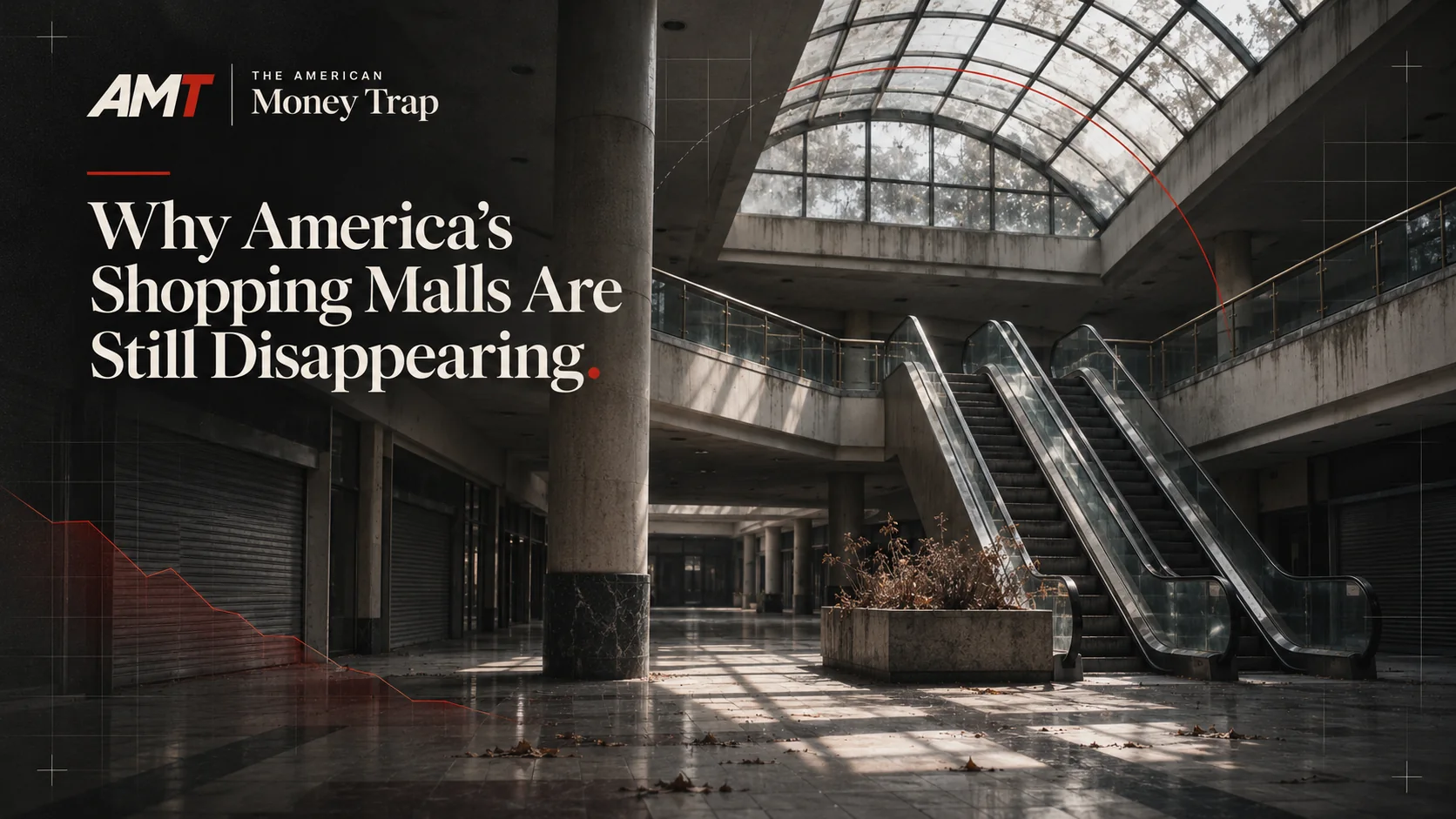
Empty storefronts are the visible part of the story. Behind them sit leases, loans, landlords and anchor tenants whose decisions ripple through entire properties. This documentary looks at the mall as a business model — how it made money, and why that model stopped working in many places.
The questions we're researching
- How do mall owners earn money from tenants and property values?
- What happens to a property's finances when an anchor store leaves?
- Which malls are doing well, and what do they have in common?
- What gets built when a mall closes, and who pays for it?
Sources & references
These are research leads we plan to consult. They are not yet citations for any claim on this page.
- 1.Monthly and annual retail trade(external site) — U.S. Census Bureau
Including e-commerce share of retail sales.
- 2.EDGAR company filings(external site) — U.S. Securities and Exchange Commission
Filings by mall-owning REITs and retailers.
- 3.Industry research(external site) — International Council of Shopping Centers (ICSC)
Industry association; verify independently.
Spotted an error? Email corrections@example.com. We correct mistakes openly. This article is educational and is not financial advice.
The documentary
Premieres on our YouTube channel.