The Hidden Economics
The $20,000 Home Upgrade That Might Never Pay for Itself
Big-ticket upgrades are often sold on savings and resale value. We look at how to test those promises with simple arithmetic before signing a contract.
By The American Money Trap Editorial Team
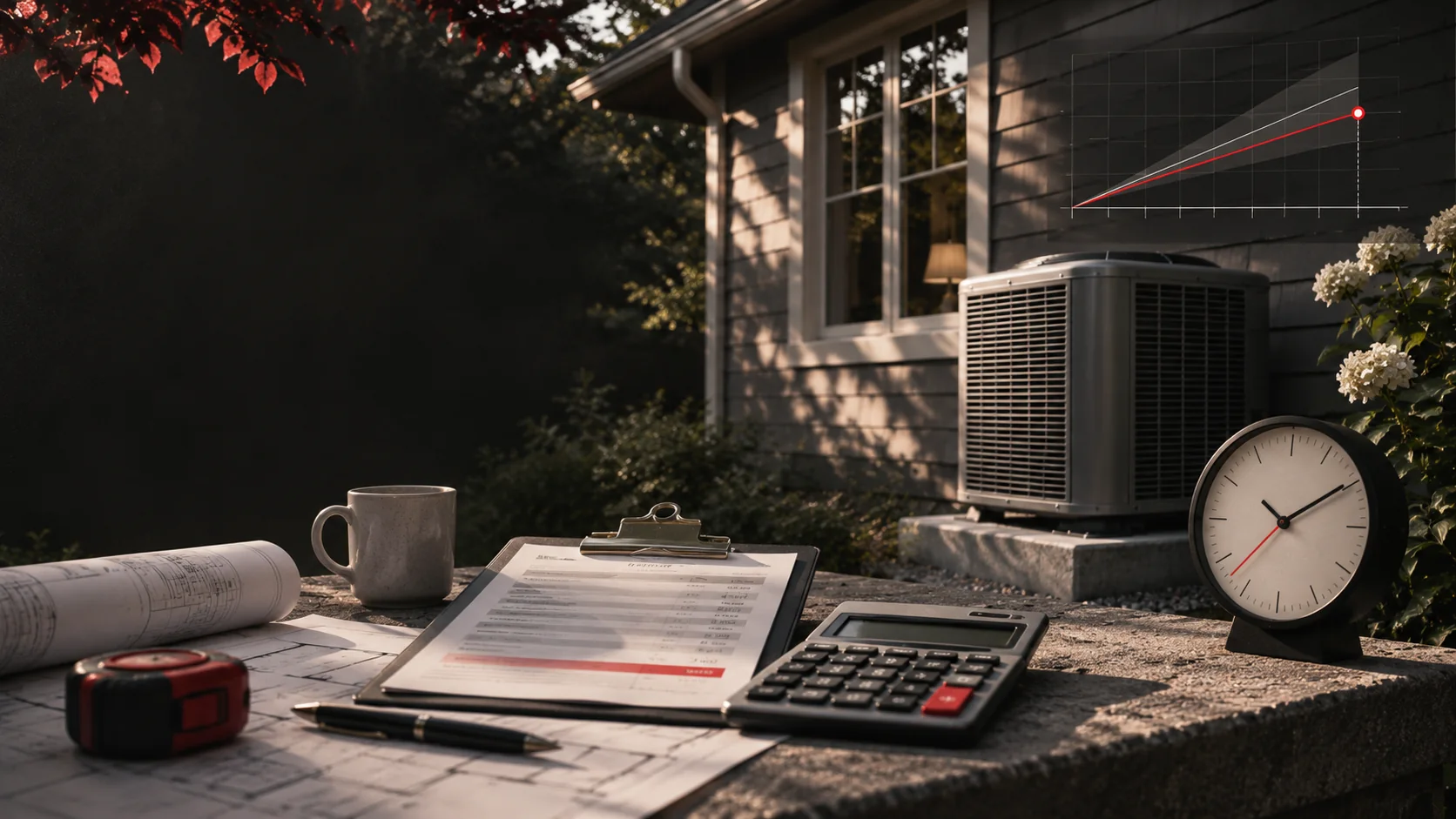
The pitch is familiar: a significant upfront cost, offset by lower monthly bills and a higher sale price later. Sometimes that is true. Sometimes the savings are optimistic, the maintenance is ignored, and the homeowner moves before the investment ever breaks even.
Start with the simplest possible question
How many years until the upgrade has paid back what it cost? Take the project cost, subtract any rebates you are certain to receive, and divide by the annual savings left over after maintenance. If the answer is longer than you plan to own the home — or longer than the upgrade is expected to last — the sales pitch needs a closer look.
Where the savings estimate comes from
Savings figures in a sales presentation are estimates produced by the seller. Ask how they were calculated, which energy prices were assumed, and whether they are based on your actual usage. Your own utility bills from the past twelve months are a better starting point than a brochure.
Incentives change — confirm them in writing
Federal, state and utility incentives for energy upgrades have changed significantly in recent years, and eligibility rules are specific. Treat any incentive as zero until you have confirmed it applies to your project, your location and your installation date.
- Request savings estimates based on your own usage data.
- Ask what maintenance or replacement parts the upgrade will need.
- Compare the payback period with the product's expected lifespan.
- Confirm rebates and credits independently before counting them.
Sources & references
These are research leads we plan to consult. They are not yet citations for any claim on this page.
- 1.Energy Saver(external site) — U.S. Department of Energy
- 2.ENERGY STAR(external site) — U.S. Environmental Protection Agency
- 3.Database of State Incentives for Renewables & Efficiency(external site) — DSIRE / N.C. Clean Energy Technology Center
Check current eligibility; programs change frequently.
- 4.Cost vs. Value Report(external site) — Remodeling / Zonda
Survey-based resale estimates; methodology should be described if cited.
Spotted an error? Email corrections@example.com. We correct mistakes openly. This article is educational and is not financial advice.
On YouTube
Watch our investigations on YouTube.